I’ve been looking at smart scopes for quite some time, and when a used Vespra Pro popped up @ B&H for a price I thought was a great deal, I snagged it.
My first attempt at imaging with this scope was reasonably successful with a pretty good shot of Pleides, but I got greedy, letting it run too long, and the final image was ruined by one of my trees.
I have since figured out how to download the individual images, but realized I hadn’t selected .fits, so all the data was in .jpg for that target. Still, I’m happy with the results and thrilled to be able to set up on a whim, unlike with my larger rigs.
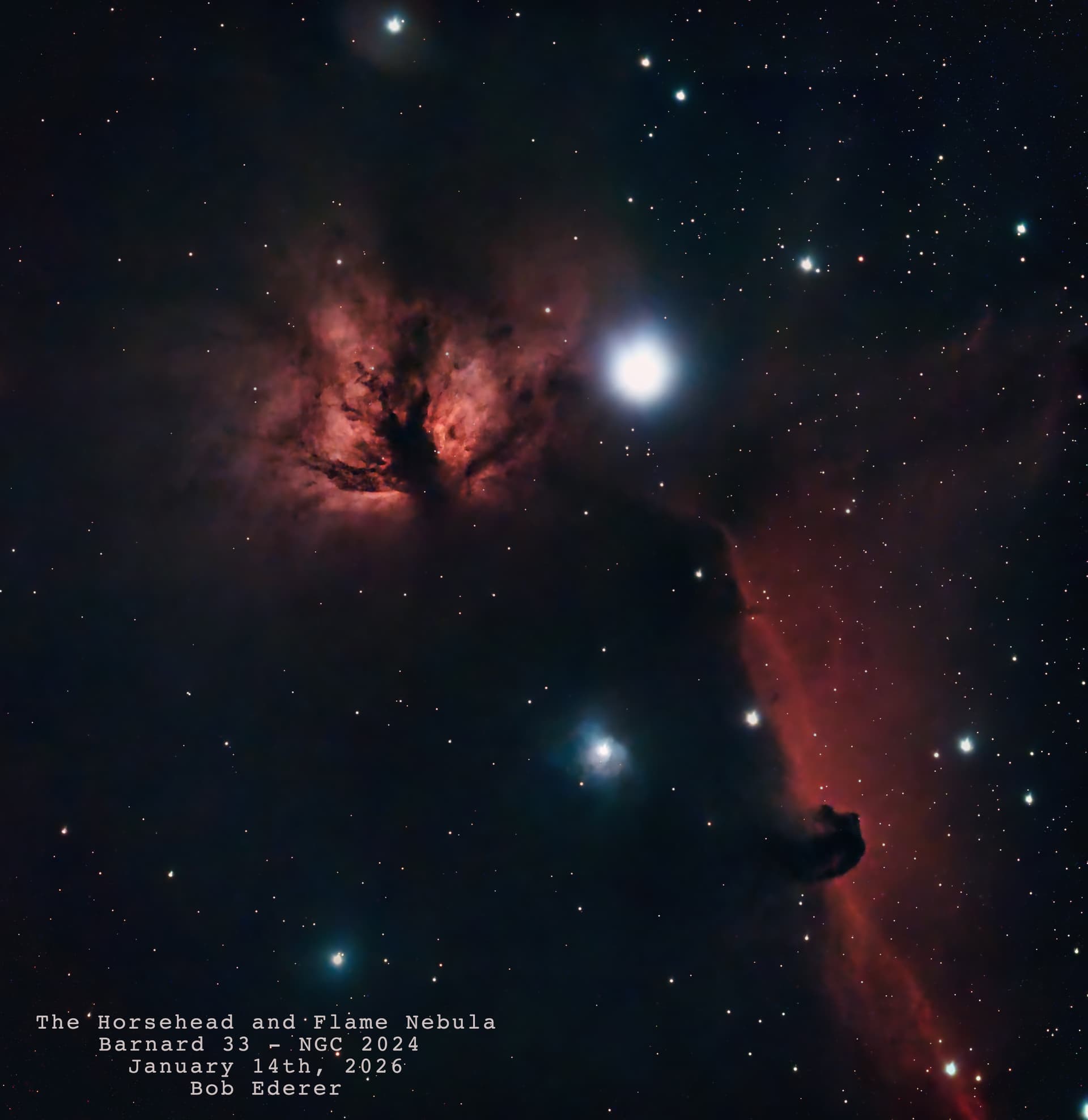
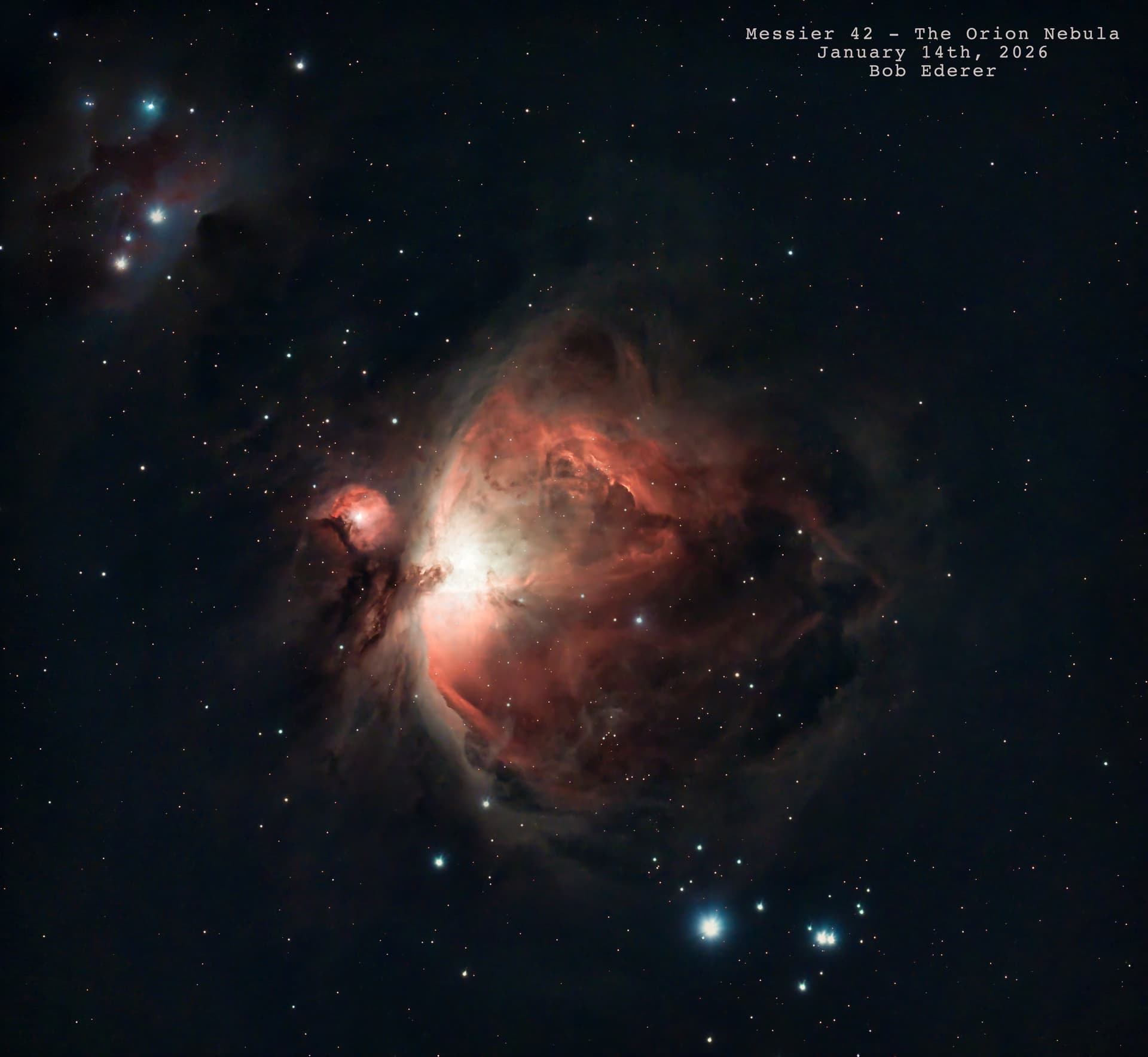
Last night I got it out again, and, having learned from my mistakes, I focused on Orion for a bit and was impressed by the internally stacked images. I added a light pollution filter since my first session, which I think helped improve things. I also processed the data in Pixinsight to compare with the internally stacked images and achieved good results, especially given the limited time for each target (less than an hour for each).
These aren’t perfect, and probably a tad overworked, but I think they are good enough to share.
Welcome to the dark side, Bob! Another innocent has fallen to the allure and ease of use of the smart telescopes!
Great first images! Although you can get images the first night out with almost all of them, you should get better images as you get more experience with them. I’ve come a long way since I got my first light image with my eVscope 2 almost 3 years ago.
I have to admit, I’m having a lot of fun with the Vespera! It’s too easy to walk out into the backyard and start imaging within minutes. It has been a bit frustrating at times dealing with all the variables of a more complex setup, so this has really helped get me motivated more to get those sorted out.
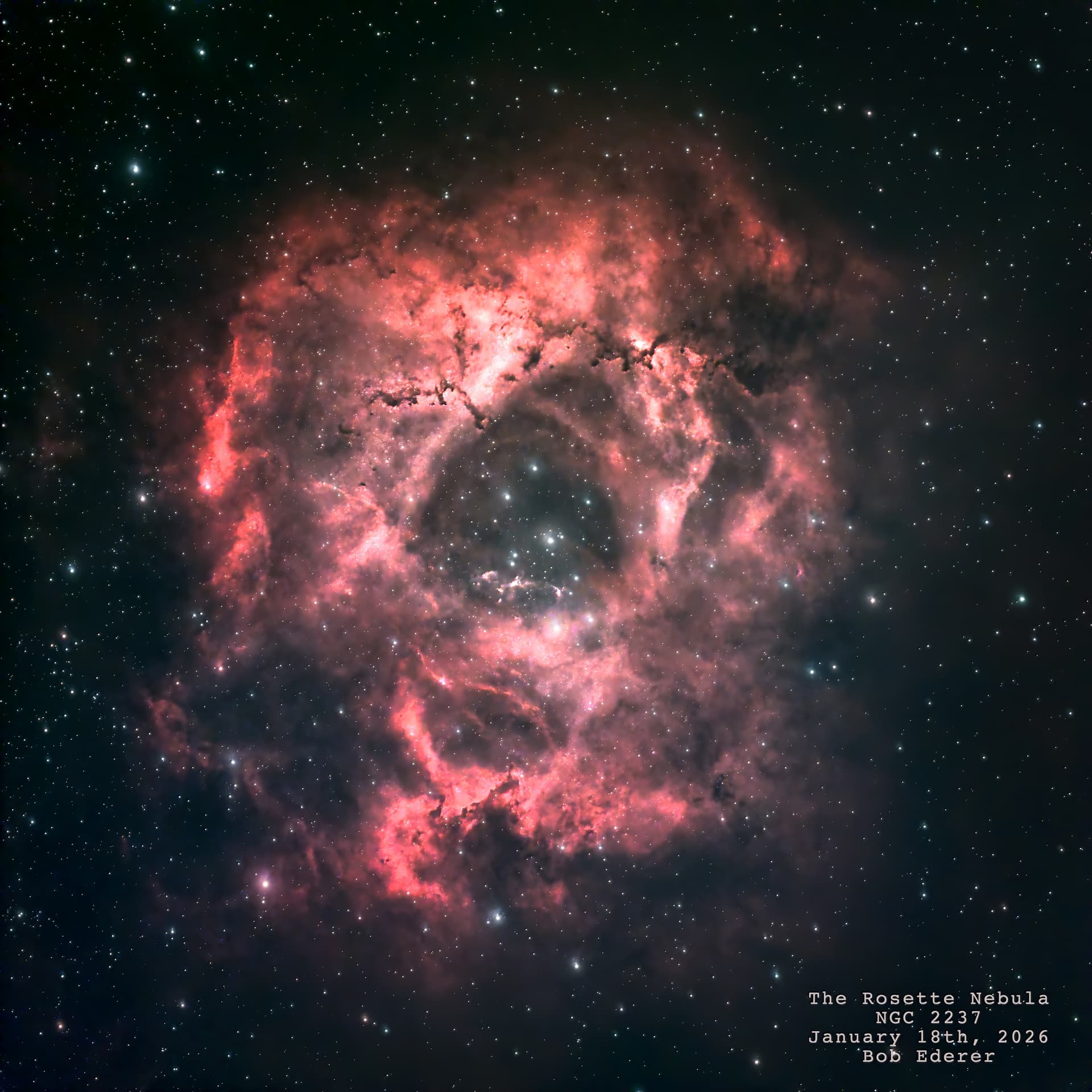
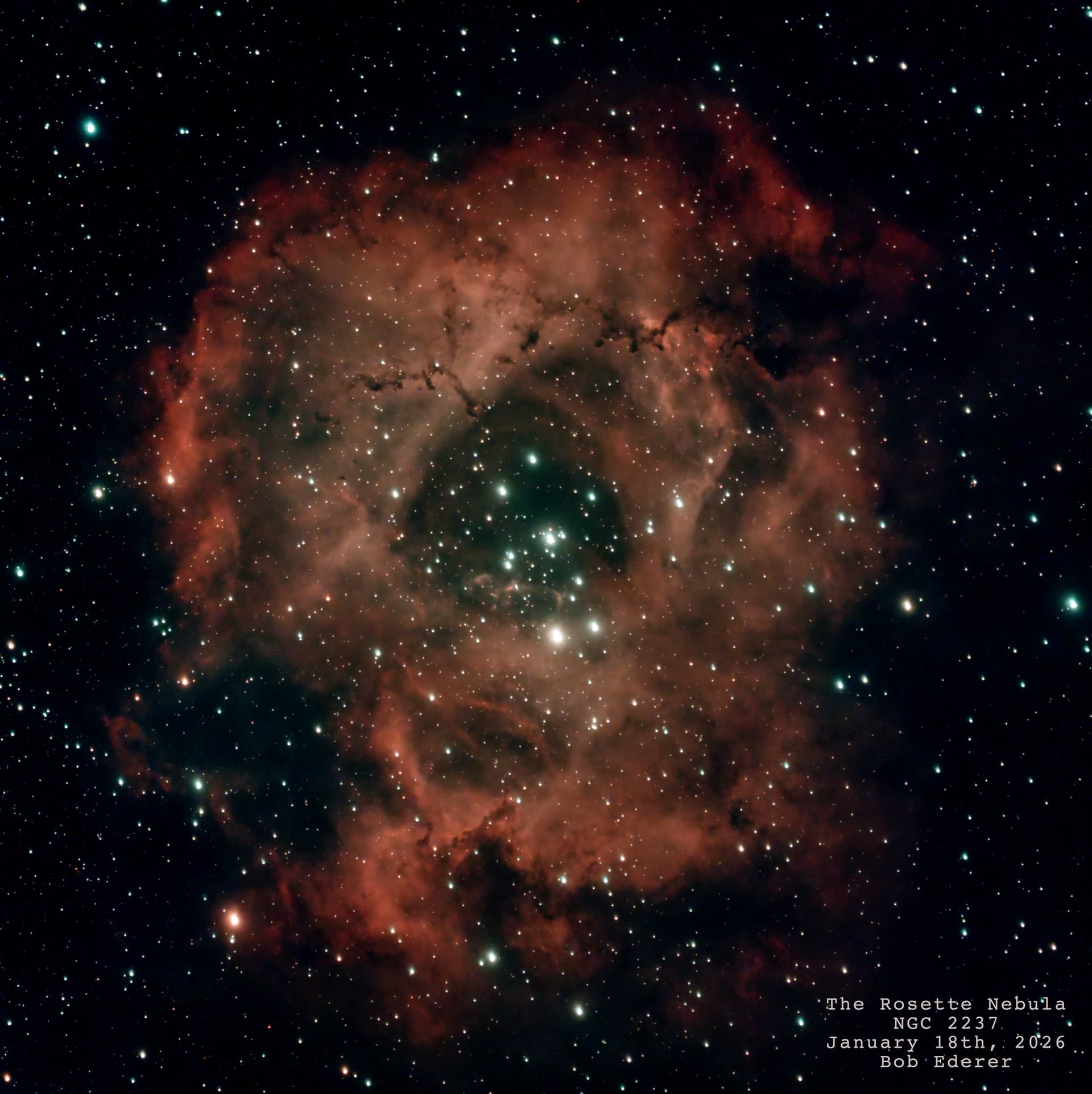
Last night, for instance, on a whim, I set up and got some good images of The Rosette Nebula. Something I probably wouldn’t have done before, but now I’m actually wanting to set up one of my larger rigs to see if I can get a comparable image.
I’m still shocked at how well this Vespera performs in such a light-polluted area. Here are a couple of images representing what the Vespera spits out (with minor edits, mostly removing noise), and a manually stretched image using the .tiff output. Using Pixinsight, the manually edited image color corrected to be more pink, and I feel I was able to get a bit more detail from the data.
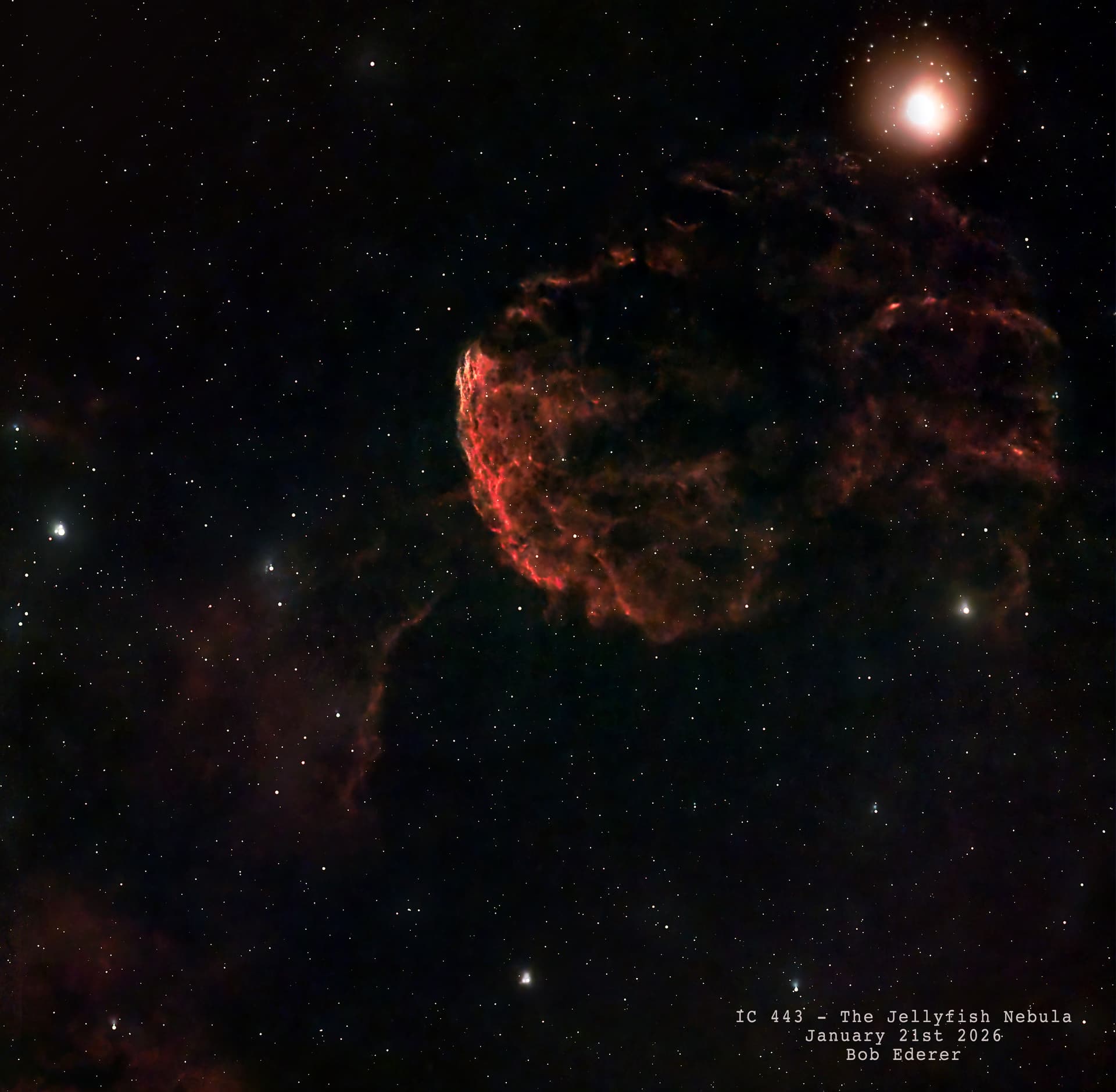
Another night, another target. The Jellyfish Nebula, IC 443.
This took a bit of work to get this image as even with over 1000 10-second frames, it was still fairly dim after stretching. I’m going to spend more time on this with my mono camera and filter wheel as I think there is a lot of data I’m not going to get with the Vesperta Pro. This seems to be one of the few targets that I can get over 4 hours on, barely clearing my roof and giant Bradford Pear tree, in my backyard.