Would the Celestron StarSense Explorer 130mm Dobsonian be a good telescope for a beginner?
Janell,
Welcome to the club. You and your questions are welcome!
In short, yes. Just be sure that you realize that this style requires a stable table.
I’m excited for you. You must be too!
…But, if you can wait even a month or so before your purchase, I always suggest first purchases in this order:
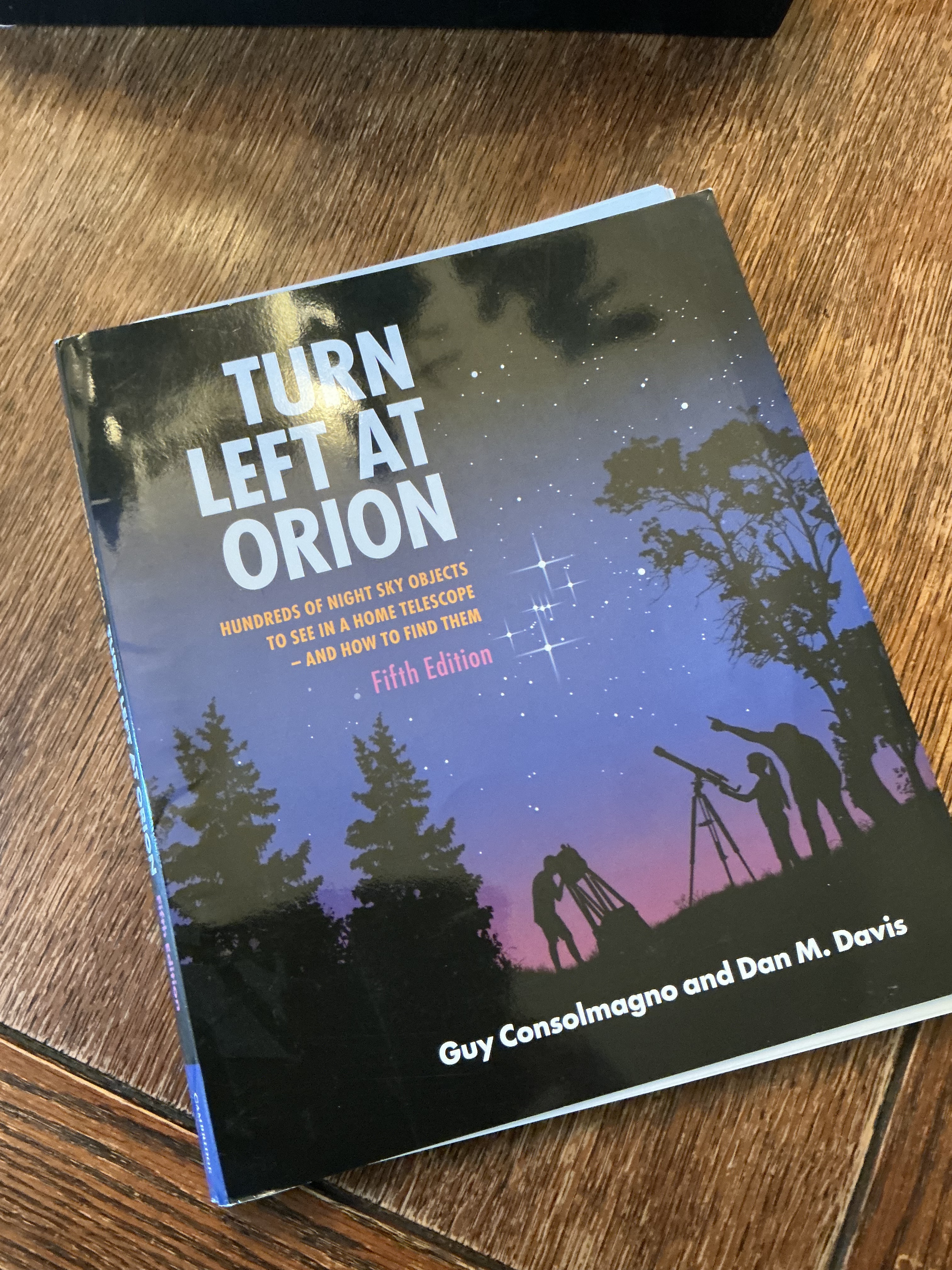
- Book: Turn Left at Orion (a fairly recent used copy is fine.) (about $20 used, $30 new)
- Binoculars — comfortable that you will also use for general purposes, I.e., not astronomy specific, but for sports, birds, hiking, etc. (about $100-$150)
- Try before you buy:
The style you’ve selected is the most common design that clubs buy for you to “check out” from a library. I know we have at least one member that owns a very similar model that he will allow you to try out with him at a novice night or all club members night.
2 Likes
Hi there!
I would also recommend waiting before purchase and all the other items Tom mentioned. Additionally, I would recommend coming out to any of the clubs events to view and use equipment that other members have. That can go along way to helping you decide, you may see something you like better. 

One more thing, for around the same price you also have the option of going with a smart telescope like the Dwarf Mini, currently on sale for $399. there are other smart telescope options from ZWO SeeStar as well.
2 Likes
Welcome to the club!
I agree with the earlier posts and here’s some more to consider.
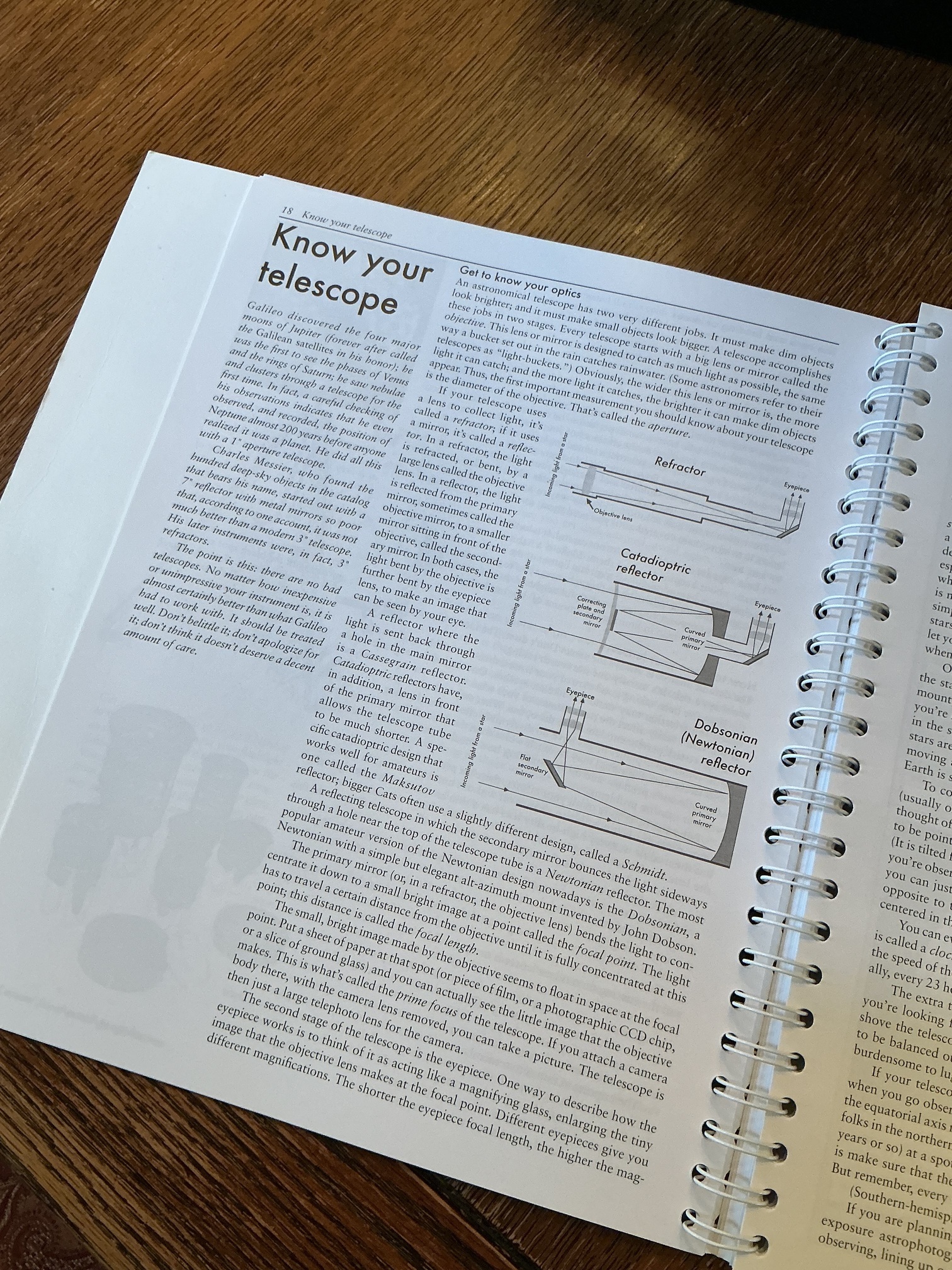
Astronomy is all about how much LIGHT you can collect. You can think of an optical telescope as a light bucket-- bigger bucket, the more and the dimmer objects you can see. A Dobsonian mount and reflector telescope design allows you to have a big light bucket for smaller cost. But, there are trade offs. The objects in the sky have relative motion across the sky. This type of mount does not allow what’s called a clock drive to cancel out that relative motion. You’ll have to readjust the scope every few minutes to stay on an object and you won’t be able to do astrophotography.
Speaking of astrophotography, I’m in the camp that thinks the SeeStar and Dwarf are NOT TELESCOPES, they’re really cool cameras. Don’t get me wrong, I love my SeeStar, but it’s not a telescope. You can’t look through it with your own eyes.
Good luck and I hope you attend an astronomy event!
1 Like
I believe the 30 inch telescope at CRO is Dobson. Generally what you said it true, however.
Another thing to consider is the weight of the instrument you buy. Most 8 inch (non-Dobsonian) are easily handled by one person.
1 Like
@Janell, What other questions do you have? (You can see that we’re full of…answers, often even beyond what you’ve asked.) 
1 Like
Thank you for all of the replies. I joined in January and have been to a few of the meetings at the Science Museum, but I haven’t made it to any other events. I have been reading and researching, and it gets overwhelming lol! I had settled I thought on the Dobsonian because I read they are the best as far as light gathering and simple for a beginner to operate. I know I do not want a smart telescope at first because I want the experience of learning to navigate the sky and to look through an eyepiece. I am now a little confused again, though, since you all brought up the fact that with a Dobsonian, I can’t track and won’t be able to do any astrophotography. I guess you can’t have it all… Is there a beginner telescope that would be able to do basic astrophotography? My plan would be to learn and view the planets and the sun (get a solar filter eventually) and then move on from there. Thank you!
1 Like
Keep asking questions!
There absolutely IS alot to learn and lots of different avenues to pursue. It’s easy to feel like there’s SO much to learn that it can feel overwhelming. But PUSH BACK when you get that feeling …and focus (no pun intended) on what’s most interesting to you…at that time.
Just before Covid struck, my family gifted me a Dobsonian for Christmas. I was delighted! (Actually, our son researched and shopped and my wife paid.) Along with that gift our son personally gifted me a copy of the book, Turn Left at Orion. And I’m so glad he did!
Why? It starts with:
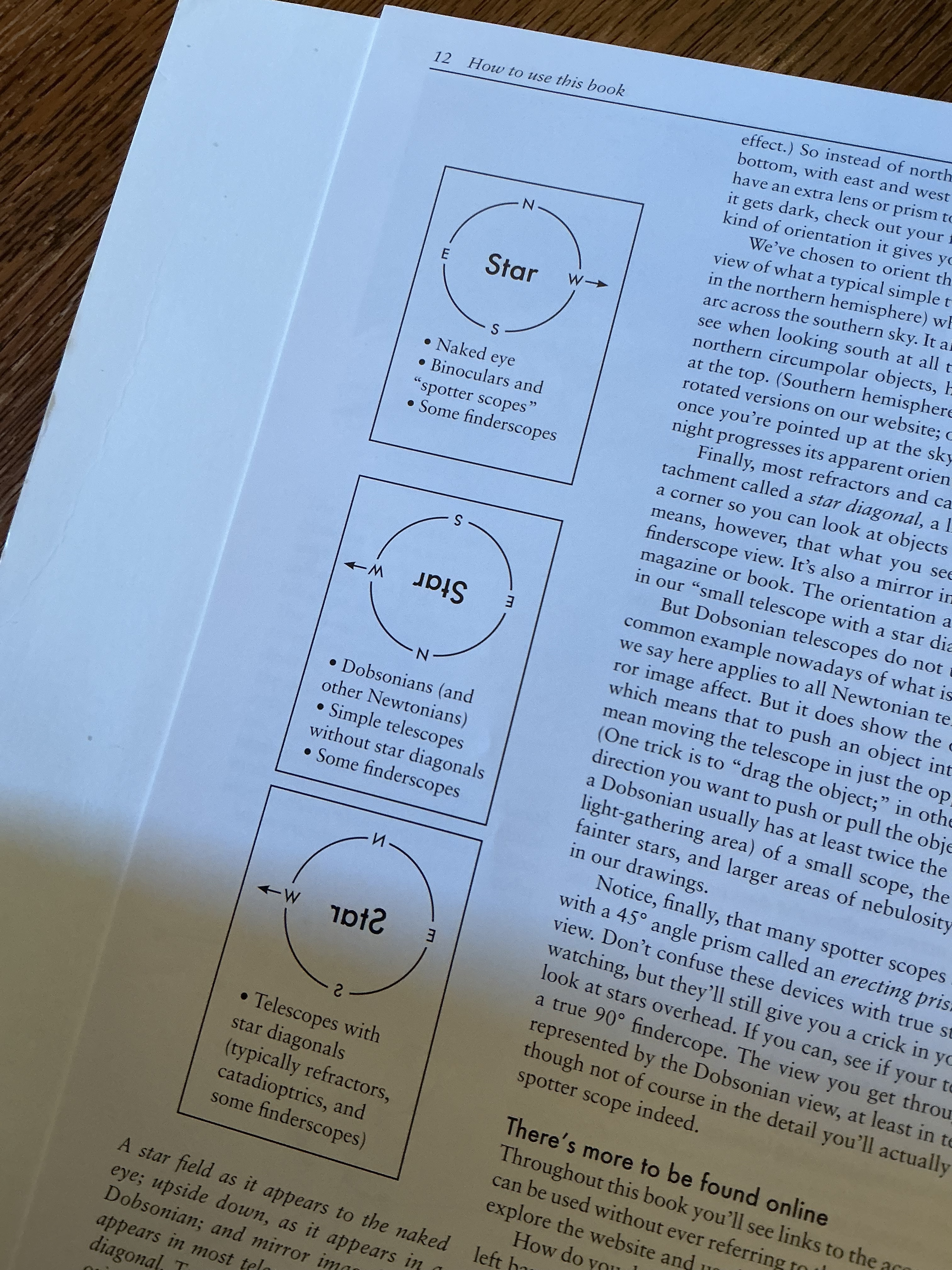
- very fundamental information (all within the first 20 pages) that I can easily read in one sitting and then refer back to.
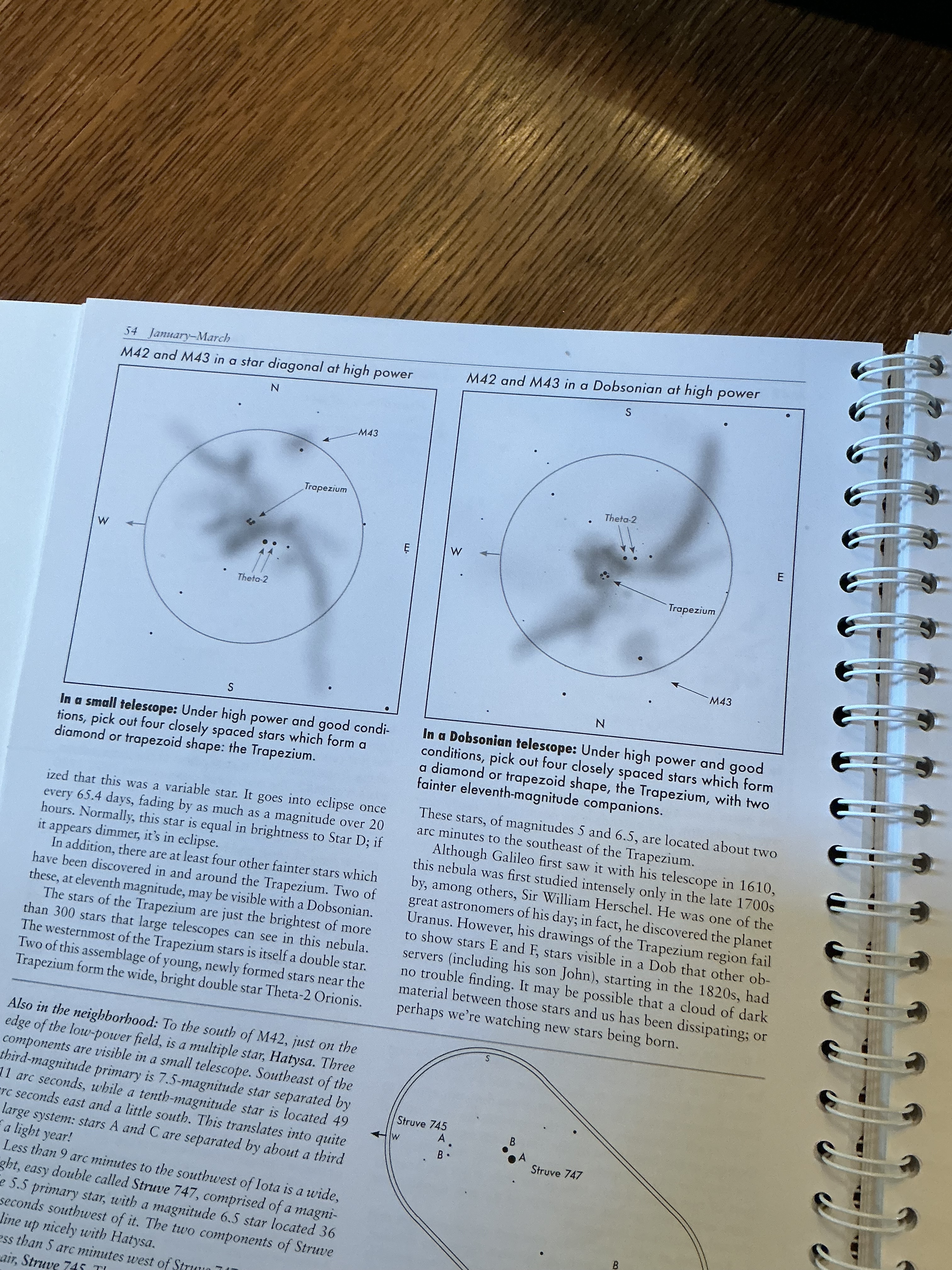
- and most importantly (to me), it “sets appropriate expectations.”
Stars are pinpoints of light. Some are brighter than others. But especially as we zoom in on them, they are TINY points of light. And, generally speaking, visual astronomy is a world of tiny white lights on a black background. (Not the glossy color images that NASA posts from Hubbell and Webb.)
Learning to see the beauty in these tiny white lights is what will really draw you into the hobby.
I think that it’s most important to start with what you can and will see with your own eyes when you simply start looking up most every night, regardless of where you are.
We’ll all have opinions on how to first spend your money, but most of us simply want you not to make a misstep and risk becoming disappointed early.
Some of us have been involved in the hobby most of our lives. Others (like me) are still very much a novice.
But, one of my favorite things about this hobby is that compared to almost any other hobby, you’ll rarely find a more universally friendly group of people bound by a common interest. (But some of us are wallflowers and there’s more than a couple of science geeks among us.)
Welcome! Keep asking questions!
2 Likes
Just remember that when you ask 10 astronomers on what telescope they’d recommend, you’ll probably get 15-20 different answers. And that’s good, not bad. Even if it can be confusing.
There’s pros and cons to every setup out there. I recommend checking YouTube videos of gear before you buy. They’ve helped me a lot in choosing new equipment.
One thing I’d recommend is to not try to get a scope that will do everything. First, I don’t think it exists. Get one that will be best for the stage of astronomy you’re at. And get one that’s fairly easy to use. I got an equatorial mount for my first major purchase, and struggled to use it. And I didn’t need that mount for the stage I was at.
As you grow in the hobby, you’ll probably get better and better equipment as time goes by. You’ll probably find your interests change in directions you don’t expect them to right now.
One great thing about the club is that someone is often selling their old, but still great, equipment as they get more advanced gear. You can often find bargains in our Buy, Sell or Trade section of the forum.
1 Like